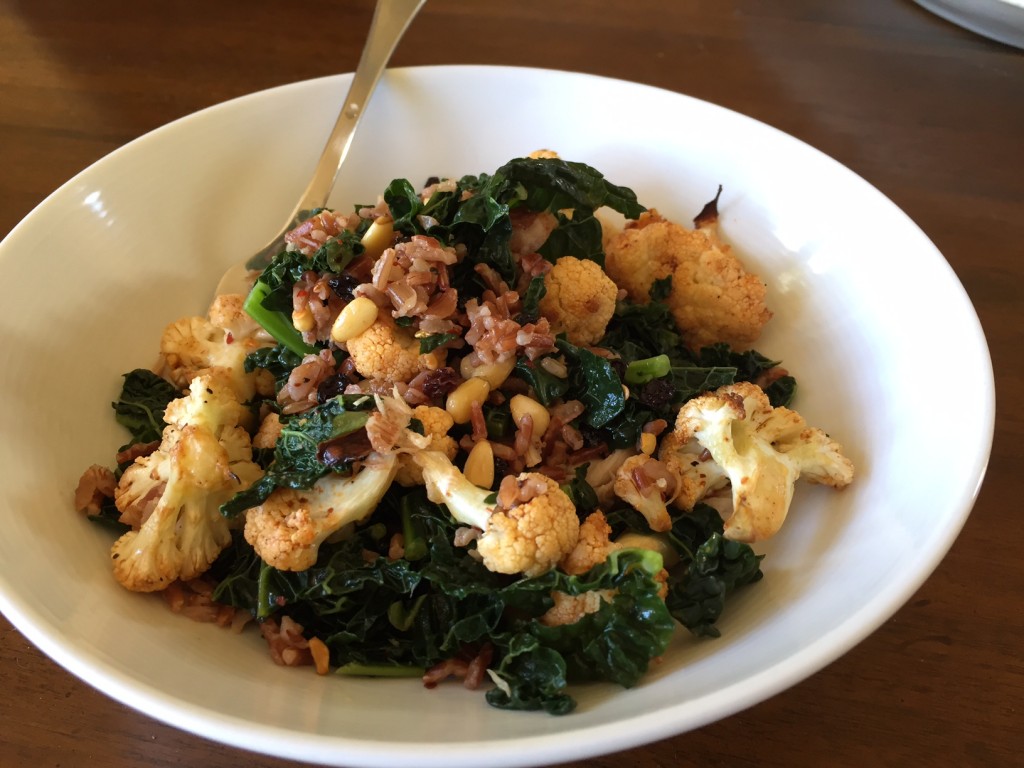
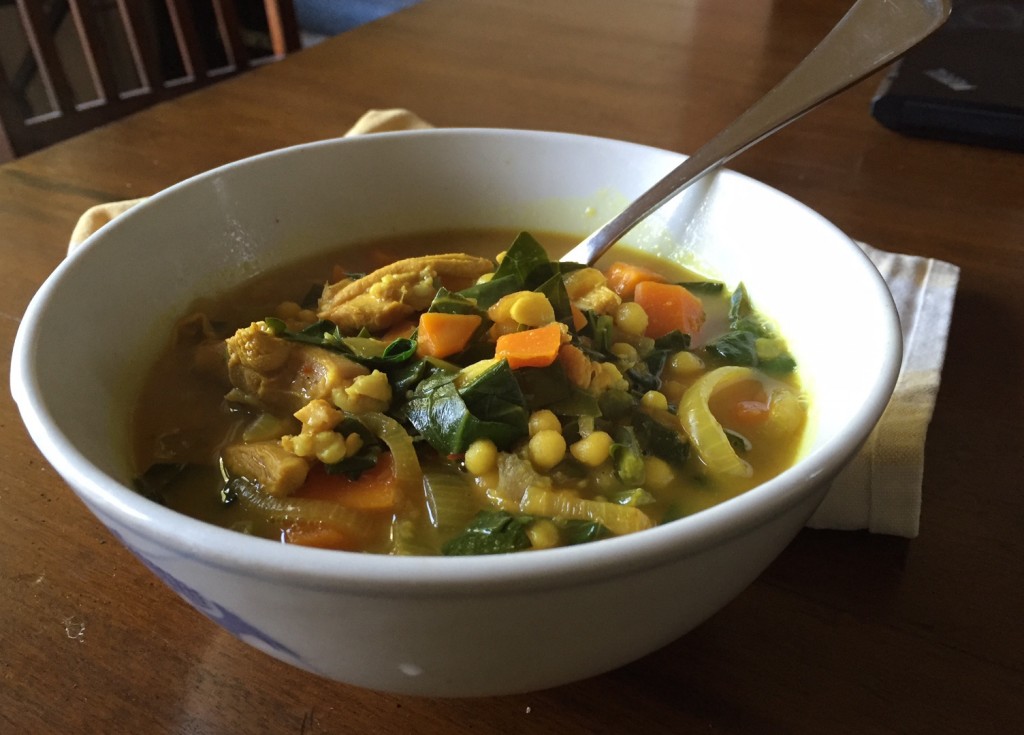
Potato and chorizo tortilla with chard agrodolce

Monday, April 9th, 2012

This tortilla was dinner tonight, together with some chard agrodolce. It was all delicious. We used royal blue potatoes – purple skin, yellow flesh – though the skin didn’t stay purple through cooking, alas. The chorizo was from Black Pig.  I think the success of the tortilla would depend on using a really flavourful chorizo (this one was fantastic). In the absence of that, I’d add a couple of skinned roasted peppers and some smoked paprika. This tortilla has less egg per potato volume than a traditional tortilla, and is thinner (about 2 cm thick), but that’s how I like it.

The chard agrodolce was a good match. This was a large bunch of ruby chard, stemmed, chopped, blanched and squeezed dry, then sauteed with olive oil, minced garlic and a handful of currants, and finally tossed with a splash of aged red wine vinegar and some toasted pine nuts. A++ would make again.


Potato and chorizo tortilla

2 onions, quartered and sliced
olive oil
5 medium waxy or all-rounder potatoes, scrubbed, cut into 1-2 mm slices
1 cured chorizo, ~120 g, sliced
1 good handful chopped parsley leaves
4 eggs
salt and pepper

Heat the olive oil in a frypan over moderate heat, add the onions, and cook until translucent and soft. They’ll get quite a lot more cooking, so no need to take them to the golden stage at this point. Add the raw potato slices and continue to fry, stirring frequently, until they are cooked (but still keeping their shape). This took about 15 minutes for us – it will depend on the potato type and how finely they’re sliced. Add the chorizo a few minutes before the end, so its flavour gets mixed through everything.

Turn down the heat under the pan to low. Whisk together the eggs, parsley and salt and pepper, then add to the pan. Give it a very quick stir through, and pat everything down flat. Our mixture was about 2.5 cm thick at this stage. Leave to cook until the middle of the frittata is getting solid, and just the top remains runny. At this point, you can flip it if you are highly skilled. If you’re like me, on the other hand, you can instead just put the pan under the grill until the top is cooked.

Serves 4, with a vegetable side.


Roast rhubarb with lime and cointreau

Sunday, April 1st, 2012

This is so basic it’s hardly worth writing, but for my own records, it was great.

500 g rhubarb stems (weighed after trimming)
2/3 cup sugar
juice of 1 decent-sized lime
a good glug of Cointreau

Cut the rhubarb into 3 cm lengths. Put in a baking dish, and toss together with the sugar, lime and Cointreau. Roast, uncovered, at 180 C for about 20 minutes, until the rhubarb is softened. The pieces will still be intact and beautiful red. Let it sit for a couple of minutes before eating, or eat cold later. Good with yoghurt for breakfast, or creme fraiche and crisp almond biscuits for dessert.


Fritter science, non-best-practice version

Tuesday, March 27th, 2012

I like to do my culinary science the right way. Standardisation, controls, a well-thought-out experimental design. This isn’t always possible to achieve on the fly, however, so tonight’s dinner should be considered as exploratory experimental work that will require rigorous follow-up. Fortunately fritters lend themselves to this kind of experimentation, as you can fry a couple, taste, modify the batter, fry another couple, modify again, and so on.

I felt like corn and zucchini fritters for dinner, and wanted to try making them with besan flour. I prepped the vegetables: corn, zucchini, scallions, coriander leaves and chili flakes. I then made up a batter based on this recipe: besan flour, plain flour, salt and water. Mixed the vegetables and the batter, fried the first batch of four, and split one with Ted for a taste test. Not bad! They were particularly good hot off the pan, crispy on the outside and light and toasty inside. I wondered, however, whether they might not be better with a little bit of feta crumbled in. So I added some feta to the mix, and cooked up another four. These were also good straight off the pan, though the feta was a little dominating in flavour. Still, the cheese was in there now, so we pressed on and cooked another four, leaving the rest on a plate underneath a tea-towel to stay warm until we were ready to sit down.

We were pretty peckish at this point, so while cooking we split another one of the first feta fritters once they had cooled down a bit, and actually the flavour was pretty good – more appealing than the no-feta version. Both the feta-free and feta-ful versions, however, were getting slightly lumpen as they cooled. There was enough mixture left for two more fritters, so I added about a quarter of a teaspoon of baking powder to this before frying them off. Ah ha! Now we see a difference – there were a few little bubbles rising to the surface as we cooked the first side, and the fritters were puffier and had straighter sides. Fresh off the pan, the first one of these that we shared was softer and lighter than the previous versions, and tasted great.

We sat down to eat a few more, with some salad and roast tomatoes. After about 5 minutes, when all of the fritters had had a chance to cool down a bit, we did a side-by-side tasting of the three versions. The first version (no feta, no baking powder) was ok, but quite dense. The second (feta, no baking powder) was noticably softer than the first version, and the feta added some more interest to the flavour. The third (feta, baking powder) was quite similar to the second, but still a little lighter.

So, the secret is feta and/or baking powder, right? Perhaps, but I am tormented by the confounding variables. The feta-free fritters were cooked earliest, so were the coldest, and maybe that’s why they seemed less good. What if I cooked the different batches for different times, so that the first set were actually just overcooked? What if the performance of the batter improves with sitting – some fritter recipes do call for a resting period before you start cooking. There’s no way to disentangle these factors! I need to make three batters in parallel, rest them the same amount of time, and then fry a fritter from each batter in the same pan at the same time, using the same amount of batter for each one. Only then will I know the truth. Until then, the recipe below is the one I currently hypothesise to be the best. Further testing required (and I will be happy to oblige – these were damn good fritters).


Corn, zucchini and besan flour fritters

2 medium zucchini, finely julienned on a mandoline
kernels cut from 2 cobs of corn
4 scallions, finely sliced
2 large handfuls of coriander leaves, chopped
2 large pinches of chili flakes, or to taste
150 g besan flour
3 tablespoons plain flour
1 heaped teaspoon baking powder
salt and pepper
170-200 ml water
80 g feta, crumbled
olive oil

Sprinkle the julienned zucchini well with salt, and leave to drain in a colander or sieve for 30 minutes. Squeeze out excess water, the spread out over a tea-towel, roll it up lengthwise, and twist to squeeze out all the remaining liquid. Put the zucchini into a bowl with the corn, scallions, coriander leaves and chili flakes, and mix.

In another bowl, sieve together the besan flour, plain flour, baking powder, salt and pepper. Stir in the water, to make a thick batter. Combine this with the vegetables and the feta. The mixture should be thick but not excessively stiff. Add a little extra water to thin if necessary.

Heat a little olive oil in a frypan over moderate heat. Spoon fritter-sized portions of batter into the pan, and flatten them out so they are about 1 cm thick. Allow them to cook until browning on the bottom, then flip and continue to cook until golden on the other side and cooked in the middle. Remove to a plate and keep warm.

Makes about 14 fritters (about 7-8 cm in diameter).

We ate the fritters with some roast cherry tomatoes  and some snow peas and pea shoots (all harvested from our garden! I was overly pessimistic about our chances of getting more ripe tomatoes on the weekend).


Baked eggs with backyard tomatoes

Saturday, March 24th, 2012

This summer was the first time we’ve ever had a garden we could grow things in. We’d previously attempted (and eventually killed) many pots of herbs in many apartments, but nothing more. Despite this not very stellar record, I was smitten with horticultural lust when we moved into a house with a sunny back wall and a fallow garden bed. I went a bit overboard ordering heirloom vegetable seeds from Diggers, then carried through a major operation starting seeds of seven different kinds of tomatoes, two kinds of peas, many different herbs, Italian broccoli varieties, and so on. And then, after preparing the soil (and filling quite a few pots as well) I planted them all out, pruned, staked, weeded, picked caterpillars and treated for whiteflies. It was a joy. It made me happy every morning when I went outside and checked how much things had grown, what varieties were flowering, which was the first to set fruit, which the first to ripen.

Like I say, it was blissfully satisfying. And I will do it all again next summer. But with one difference: I will start about three months earlier. I knew I was getting everything started late. We’d just moved to Melbourne, I was trying to catch up with things in the lab, we worked some weekends, I delayed putting in the seed order because was I really sure that I was going to do this, given my previously black thumb? By the time I committed and put in the order, it was the start of November. The first seedlings came up in late November, and I transplanted them outside in late December. This might have been ok in Brisbane, but Melbourne was not quite so forgiving. Our garden has been a lush, gorgeous, endlessly enjoyable paradise in which I have spent scores of happy hours working or sitting, but our first tomatoes only ripened a couple of weeks ago. About the same time, in fact, that I was writing an entry about how the autumnal weather was making me long for osso buco.

Since then, despite the recent rain and cold nights, a handful of tomatoes have slowly ripened, turning yellow or orange or red one by one, like lights coming on at night. Their texture wasn’t the best, but the flavour was excellent – sweet and sharp, each variety distinct. This morning we harvested all that were ripe, to roast for breakfast. We got one jaune flamme, several brown berries and lemon drops, a couple of black cherries, and about twenty incredibly tiny wild sweeties. The plants are becoming decrepit now, dropping brown leaves and looking exhausted. I’ll leave them in for another week or so to see whether any more fruit ripens, and if not then pull them out for compost. But even if this morning’s small dish of tomatoes is all we eat from this crop, it’s still been absolutely worth it. I’ve learned a lot, I’ve shown myself that my thumb is not entirely black, and I’ve gained hours of relaxation and pleasure. I’m without regret, though I have put a reminder in my diary to start the tomato seeds in August this year.


Baked eggs and tomatoes with sourdough and chevre

This wasn’t the prettiest dish, but it was delicious. I took our bowl of mixed tomatoes (probably the equivalent of about 25 cherry tomatoes), halved all but the smallest, tossed with olive oil, salt and pepper, and roasted in a smallish baking dish in a moderate oven (about 160C) until they were softened, about 15-20 minutes. I pushed the tomatoes aside to make a couple of indentations, into which I cracked eggs. Back in the oven for 5 minutes or so, checking frequently towards the end, until the whites were cooked but the yolks were still runny. Meanwhile, I’d toasted a slice of sourdough, and spread with some young chevre. I spooned the egg-and-tomato mixture out of the baking dish over the toast, and ate immediately.


Osso buco not-strictly-milanese

Tuesday, March 13th, 2012

After a weekend of 37 degrees C a couple of weeks ago, it has rapidly turned autumnish. The doona is back on the bed. I shivered through a day at work when it hit 15 degrees in the afternoon and I had come in stupidly wearing just a T-shirt. The figs on the huge tree in our backyard have finally ripened, and there are enough of them that I’ve been able to eat at least a couple of fresh figs every day, to give some away to friends, and to make this delicious fig, hazelnut and brandy cake.  While I was up the ladder picking figs a couple of evenings ago, I smelled the first wood fire of the season from one of our neighbours’ houses – a little early, perhaps, but I’ll be getting our own chimney swept soon.

When I was at the St Kilda farmers market last weekend, it was chilly, drizzling, almost misty. I had an powerful surge of homesickness for the UK and Ireland! Even though there were stalls there selling the last of the heirloom tomatoes of the summer, in all other ways it felt utterly like autumn was upon us. I stocked up on cold-weather vegetables – cavolo nero, kohlrabi, beetroot – and various bits of meat to go in the freezer for episodes of weekend slow-cooking. One of these purchases was some osso buco from Warialda Beef. The slices were enormous, about 500 g each, dark purple in colour and marbled with fat. Warialda cows are rare breed, grass-fed, and slaughtered at two and a half years, and the meat is then dry aged. And oh my god, it tastes so good. I’ve been more in the habit recently of cooking osso buco in stout, to beef (ha) up the flavour a bit, but since this meat looked so good, I cooked it a bit more traditionally in white wine. It was spectacular. Tender, rich, deeply flavoured – the best osso buco I have ever had.


three large pieces of osso buco, approx 1.4 kg in total
olive oil
2 onions, peeled, quartered, and sliced
2 decent-sized carrots, peeled and cut into 1 cm cubes
2 sticks celery, cut into 1 cm cubes
2 large glasses white wine
1 tin peeled tomatoes
500 ml stock (chicken or veal)
2 fresh bay leaves
1 large sprig rosemary
salt

Season the meat with salt and pepper, then dredge in flour. Heat some olive oil in a large oven-proof saucepan, and brown the meat on each side. Do each piece separately if they are large – don’t crowd them. Remove the meat and set aside.

Add the onions, carrots and celery to the oil remaining in the pan, and cook over moderate heat until the onion is softened and translucent, about 8-10 minutes. Add the wine, stock, the tin of tomatoes (roughly chop them with a knife in the can before adding), bay leaves, rosemary, and a teaspoon of rock salt (less if using table salt). Stir, then add the meat. The meat should be mostly covered by the liquid.

Put the lid on the saucepan and cook in the oven at about 150 C for 2.5-3 hours, until the meat is extremely tender and the liquid has substantially reduced. I tend to turn the meat over every hour or so to make sure both sides get a go under the liquid. This does make it more likely that the marrow will fall out of the bone, so if you value eating the marrow with a spoon (delicious), you might not want to turn them. It’s almost certainly not really necessary.

We served this with tubetti pasta because we were too lazy to make the more traditional risotto. It was so, so fine.


Sunday lunch of three salads

Sunday, December 4th, 2011

It’s summer officially, but not quite really. We’ve had some hot days, but they’re rare interruptions in the temperate progression of 20-degree days (and 12 degree nights). But when the sun is out, as it often is, I’m starting to get to wanting crispy salads and cold beer. We had Iñaki and Begoña, and Henry and Linda, and all the kids, over for lunch today. Henry brought a fantastic roasted spatchcocked chicken, I made these three salads below, and we finished with Greek sweets from Iñaki and Begoña, and this orange and lemon poppyseed cake. The sun stayed out for us during lunch, and while Iñaki let his gardening urge take over in the back yard (gardening date next Sunday, Iñaki?), and for a walk to the Union St park. Now it’s 7 pm and the sun is still up, but I’m thiiiiiis close to turning on the heater. Doesn’t matter, summer lunch was awesome while it lasted.


Couscous, eggplant, dried fig and orange salad

185 g couscous
250 ml boiling water
2 largish eggplants
olive oil
sherry vinegar
1/3 cup pine nuts
180 g sheeps’ milk feta, crumbled
1/4 cup currants
8 dried figs, chopped into 1 cm pieces
1 large orange, zest and juice
lots of fresh mint and parsley, finely chopped

Cut the eggplants into 2 cm cubes. Divide between a couple of large baking trays or dishes. Make sure that the cubes are in one layer, not piled up, otherwise they will steam rather than roast. Toss the eggplant with a glug or two of olive oil, a splash of sherry vinegar, and sea salt and black pepper. Roast at 180 C for about 30-40 minutes, until golden and soft.

Toast the pine nuts in a fry pan over low heat, stirring often, until they are lightly golden.

Put the couscous in a large bowl, add a good pinch of salt, and pour over the boiling water. Leave for 10 minutes, then fluff with a fork. I like to make the couscous early and let it dry a little before using it, but you can eat it warm if you like.

Once the couscous is cooked, add the roast eggplant, pine nuts, feta, currants, figs, the orange zest, half the juice, mint and parsley. Toss and taste. Add more juice and/or salt if needed.


Kipfler, green bean and smoked salmon

10 medium kipflers, peeled and cut into 2 cm pieces
about 40 green beans, tops trimmed
400 g hot-smoked salmon, skin removed
1 small bunch dill, leaves chopped
a couple of tablespoons olive oil
juice of half a lemon
2 teaspoons seeded mustard
sea salt and pepper

Steam the kipflers in steamer baskets over boiling water until they are tender. Boil the beans for about 4 minutes, until they’re cooked to your liking. Break the salmon into bite-sized pieces.

Whisk together the olive oil, lemon juice, mustard, salt and pepper. Put the potatoes and beans in a large bowl, and toss with the dressing. Add the salmon and dill, and toss again, gently. (You toss it in two stages so the salmon doesn’t get broken up.) Serve warm or at room temperature.


Summer salad, inspired by Jess

2 handfuls baby spinach leaves
2 handfuls rocket
2 handfuls baby cos, torn into pieces
2 cobs of corn, kernels cut off
1/2 yellow capsicum, finely sliced
1 small cucumber, halved, seeded, and sliced
8 giant cherry tomatoes, quartered
8 sun-dried tomatoes in oil, chopped
1 avocado, peeled and chopped
olive oil
vinegar (sherry, champagne, tarragon, your choice)
salt and pepper

Toss together all the vegetables. Whisk together the oil, vinegar, salt and pepper. Dress the salad and serve at once.


Spring sushi bowl

Tuesday, November 29th, 2011

Hello comrades. I have lots to report, but I am rather tired, so I will keep this short.

Melbourne is awesome! Life is fab. We have a wee back yard with a lemon tree, a fig tree, lavender, and a rampant mint plant. I am growing seven kinds of tomato from seed, as well as snow peas, zucchini, and forests of herbs. I’ve found excellent markets, pastry shops and restaurants. I dawdle down the streets near our house, transfixed by the lushness and prettiness of people’s front gardens. I’m getting closer to finding a bike route to uni that I am happy with. I love the fact that it’s almost December but I still don’t swelter during the day, and in the evening I can sit in the garden, listening to the cicadas, and appreciate the coolness. I thought it would be the city and inner suburbs that I would love in Melbourne – and I do love them – but our day-to-day life out in Armadale is wonderful. I am very happy. I can imagine living here for a long time.

Here’s what I ate for dinner tonight. Very simple, but satisfying to both the eye and to taste. The cicadas, the garden and the cool night air took care of the other senses.


Sushi bowl for one

a handful of cooked brown rice
1 bunch of asparagus
a quarter of a large avocado
a slice of firm tofu
sesame seeds
nori
ponzu

Trim the asparagus, halve the spears, then steam until tender. Peel the avocado segment, then slice crosswise into about 10 slices. Saute the tofu until golden, then cut into bite-size batons.

Spread the rice over the bottom of a flattish bowl. Top with the asparagus, avocado and tofu in an aesthetically pleasing manner (I put asparagus on one side, the avocado fanned out on the other, and tofu in the middle). Sprinkle with sesame seeds, snips of toasted nori, and ponzu. Eat.


Earmuffs, lemon possets, etc

Sunday, July 31st, 2011

Tedster and I are moving to Melbourne in 13 days. Fuuuuuuuuuuuuuuuuuuuuuuuuuuuuuuuck!

… Let me take a short pause here to hyperventilate …

Fortunately, a couple of weekends ago we went to Christmas in July at the Chaddo, and Santa gave Ted a pair of furry earmuffs. We decided tonight that these were the Stress Earmuffs. You would put them on if you were stressed, and they would make everything better. Or perhaps they would just be the outward sign of your stress, so other people would see and treat you nicely. Either way, we have spent the last few hours donning the ‘muffs to express our angst. I have some of the best photographs I’ve ever taken, of Ted wearing the earmuffs and facially demonstrating his stress, but I will not put them on the internet because I love Ted like no other husband and every man deserves his dignity. And also because there are quite a few photos of me looking deranged too.

We’re clearing out our apartment, writing lists of the dozens of things that need to be done each day between now and when we leave, putting earmuffs on, making appointments with an accountant to get several years’ worth of tax returns done, arranging for the utilities to be disconnected, taking photos with earmuffs on, sorting out a couple of cupboards, deciding that this morning’s resolution not to drink any wine today was stupid and should be broken forthwith, and so on. It feels like we’ve been preparing to move forever, but no matter that I thought I was decently organised up until now, crunch time has made me realise how very, very wrong I was. Oh god, excuse me while I go and put something warm and fluffy on my ears.

Part of the moving process is seeing many of our friends for goodbye-for-now meals. There have been many occasions recently, at one or other of these meals, when I’ve looked around the table at the faces of my so, so dear friends and wondered what the hell we are doing leaving. (The answer is job-related.) The eating notes have chronicled many of these meals. The most recent of these was last Friday, when Ian, Lisa, Charly, Rich, Sal and Jim came over to our place. It was an awesome evening.

We started with olives and some saucisson that Lisa brought. Then onion, mustard and fennelseed tart, with a mixed-leaf salad. Then, a little while later, seven hour leg of lamb (more or less like this, just larger in size and cooked for the full seven hours at 120 C) , with mashed potatoes and green beans. And finally, while reclining on the couches afterwards, lemon possets for dessert. The possets are great: fairly small, rich but refreshing, and very easy to make. They also need to be made well ahead of time, which means that your effort upon serving is limited to getting up and getting them out of the fridge. Bonus.


Lemon possets

800 ml cream (see note below)
200 g sugar
finely grated zest of three lemons
180 ml lemon juice (from approx three lemons)

Combine the cream, sugar and zest in a saucepan. Bring to a moderate simmer, and cook for four minutes, stirring a few times a minute. Keep an eye on it!

Remove from the heat, let it settle down for a minute, then stir in the lemon juice. Let it sit for a few minutes.

Strain through a sieve into a jug, to get rid of the zest. Pour the strained liquid into eight ramekins. Refrigerate them for at least 4 hours, and preferably closer to 8 (or overnight). This tastes much better and has a more enjoyable texture after it has been really thoroughly chilled.

Serves 8.


Note: I used Barambah cream, which looks thick and slightly yellow like double cream, though it is only single cream (36% fat). Most posset recipes call for double cream.


Very briefly:

Saturday, July 23rd, 2011

An excellent morning at the Powerhouse markets! Purchased: cauliflower, cavolo nero, parsley, goat cheese, saucisson, sourdough, mushrooms, duck eggs, apples, green beans and cherry tomatoes. The last seem not very seasonal, but they’re from a local farm, and after all this is the subtropics…
Plans for the week:

cauliflower soup with mustard and gruyere croutons

mushroom, rosemary and duck egg frittata

a replay of the grilled aubergines with tahini and yoghurt sauce from last week, this time with quinoa, chickpeas, and roast tomatoes, for Sunday dinner with Danielle

a minestrone with the cavolo nero, perhaps? or maybe braised cavolo nero with onions and garlic, on sourdough toast, with a super-soft-boiled duck egg broken over the top?

something – anything – with the spring onion kimchi in the fridge. Yum yum!


Fervent recommendation of the week:

Ponycat, a cafe around the corner from us on Brunswick St. This is one of the places in Brisbane I will really miss when we go. The coffee is usually spectacularly good, sometimes perfect, rarely average, never bad. And the staff are so, so lovely. I can’t convey just how warm they are. Going there makes my day better.


Tahini: I finally understand

Monday, July 18th, 2011

I had a Damascene conversion regarding tahini tonight. I had never quite seen the point of it before. Whitish paste, sticks your lips to your teeth, slightly bitter, sits untouched in the fridge for years till it goes rancid and is guiltily thrown away…

But no longer! I was in Mrs Flannery’s (a local organic and wholefood shop) a couple of weeks ago, in the mood for randomly trying things, and ended up buying a little take-away container with fairly fresh tahini made from unhulled sesame seeds. It’s quite a dark brown, and it tastes like the sesame-ish equivalent of nut butter. Delicious. It still sticks my lips to my teeth, but that’s ok when there’s a wonderful taste going on at the same time.

I used it tonight to make these grilled aubergines with yoghurt-tahini sauce and herbs, from Food Stories. They were great. Cooking the aubergine slices under the grill means they don’t get to absorb a litre of oil, they end up tender on the inside and golden (but not oily) on the outside, and the cooking is hands-off. We ate the aubergines and sauce over some white quinoa; a good combination as the quinoa adds a bit of body to the dish and soaks up any extra sauce nicely. What would be really spectacular though, I think, would be to add a layer of slow-roasted, garlicky, almost-cooked-to-sauce cherry tomatoes. I’d serve it on a big dish with a base layer of quinoa, topped with the tomatoes, then the aubergine slices, and the yoghurt/tahini sauce spooned over the top. The sweetness and intensity of the tomatoes would kick the whole thing up a final notch.

Anyway: go the unhulled hippy-shop tahini! It is the business.